Pacemaker Doctor is a trusted initiative dedicated to advanced heart rhythm care, providing expert guidance, treatment, and support for patients with cardiac device needs.
Pacemaker Doctor is a trusted initiative dedicated to advanced heart rhythm care, providing expert guidance, treatment, and support for patients with cardiac device needs.
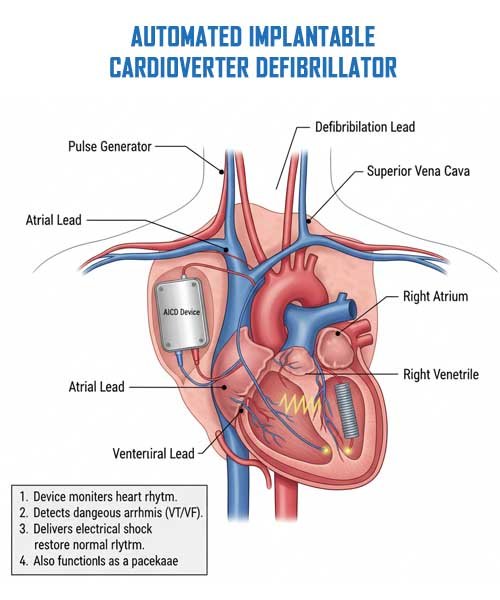
An Automated Implantable Cardioverter Defibrillator (AICD) is a small, life-saving device placed inside the chest to monitor heart rhythm and deliver an electrical shock if a dangerous arrhythmia occurs. It helps prevent sudden cardiac death in patients at high risk due to heart failure, cardiomyopathy, or previous cardiac arrest.
AICD's continuously track the heart’s electrical activity and automatically correct fast or irregular heartbeats such as ventricular tachycardia or ventricular fibrillation.
The procedure is usually performed under local anesthesia with mild sedation.
The patient is usually discharged within 48-72 hours and can resume normal activities in a few days with minor precautions.
Although AICD implantation is generally safe, potential complications include:
Regular follow-up and device checks ensure safety and proper function.